

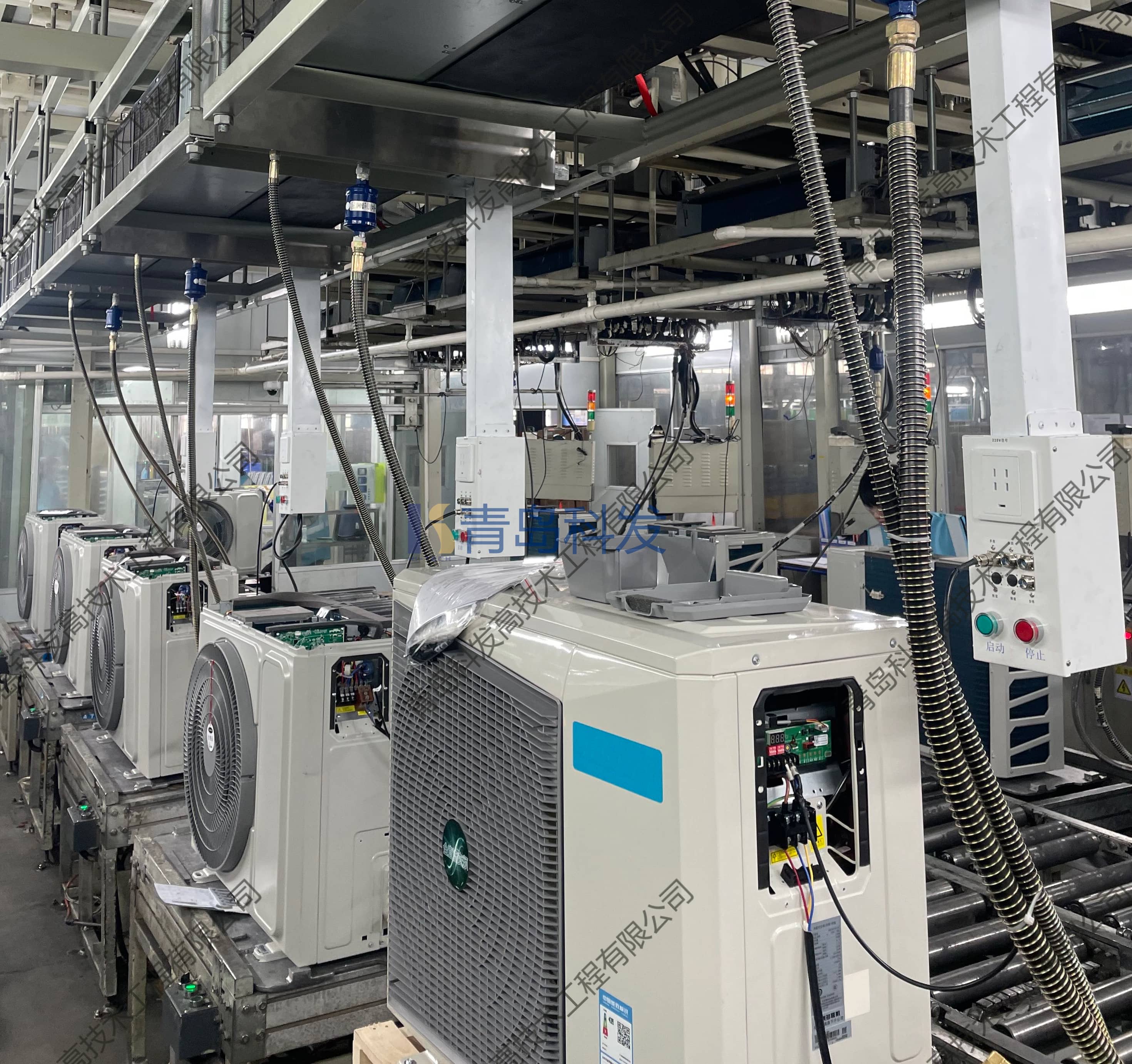
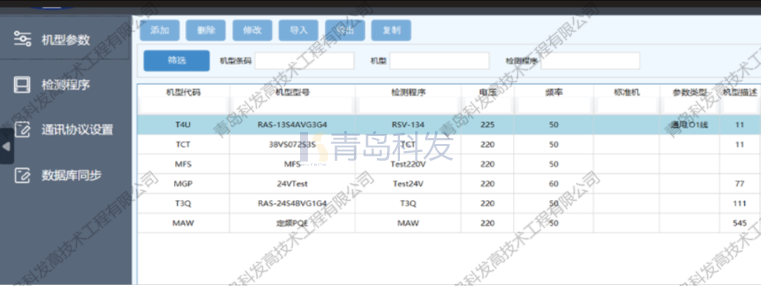

This test system utilizes dynamic/static detection modules to monitor parameters such as internal temperature and input power of air conditioners, thereby evaluating the cooling and heating performance of air conditioners.
1. Communication: Equipped with a dedicated variable-frequency tester, the system uses multiple communication protocols to establish data interaction with air conditioner indoor/outdoor units and control boards, supporting command issuance, parameter reading, and status feedback.
2. Multiple System Judgment Modes: The system collects data including temperature, pressure, current, voltage, and power. It sets standards such as upper/lower limits, tolerances, and temperature differences, and makes pass/fail decisions based on runtime and equipment status.
3. Production Line Beat Adaptation: The full testing line is equipped with multiple performance test stations plus a central control computer, compatible with residential, window-type, and inverter air conditioners, matching the continuous testing rhythm of the production line.
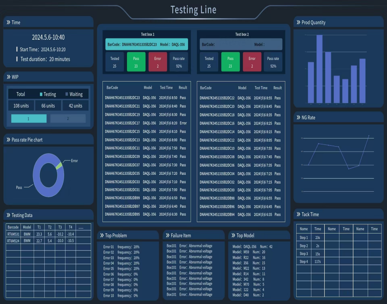
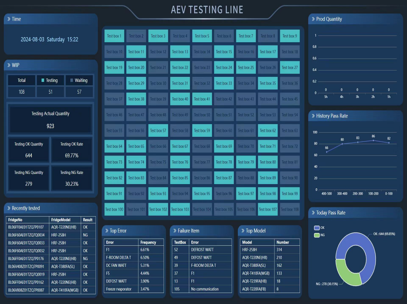
4. Automatic System Statistical Reports: Supports data queries by barcode, model, time, and other dimensions. Automatically calculates total tests, pass count, fail count, and pass rate. Detailed test records and failure breakdowns can be exported.
5. Supporting Hardware: Includes a variable-frequency power supply, electrical parameter measurement modules, multi-channel temperature/pressure acquisition modules, a standard indoor unit, barcode scanners, various connecting pipes, and sensors.
6. Testing Coverage: Capable of testing whole-unit current, voltage, power, power factor, multi-point pipe temperature, inlet/outlet air temperature, and pipe pressure. It also reads all operating parameters from the outdoor unit control board and supports electronic control data programming.
7. Sampling Cycle: Data is collected in segments according to preset test steps and runtimes. Each test item is sampled at scheduled process nodes, with full-process runtime data recorded throughout.
8. Power Acquisition: Through the electrical parameter measurement module, the system captures whole-unit operating power, cooling/heating mode power, heater band power, and other metrics, while synchronously recording current and power factor.
9. Temperature Acquisition: Equipped with multi-channel temperature acquisition, the system collects temperatures at multiple points including inlet air, outlet air, pipe lines, compressor discharge, and ambient environment, and calculates various temperature differentials.
10. Compatible Test Power Supplies: Equipped with a variable-frequency power supply supporting voltage specifications such as 220V and 380V, compatible with both 50Hz and 60Hz frequencies for air conditioner models sold domestically and internationally.
-
Type
-
Obtain solutions